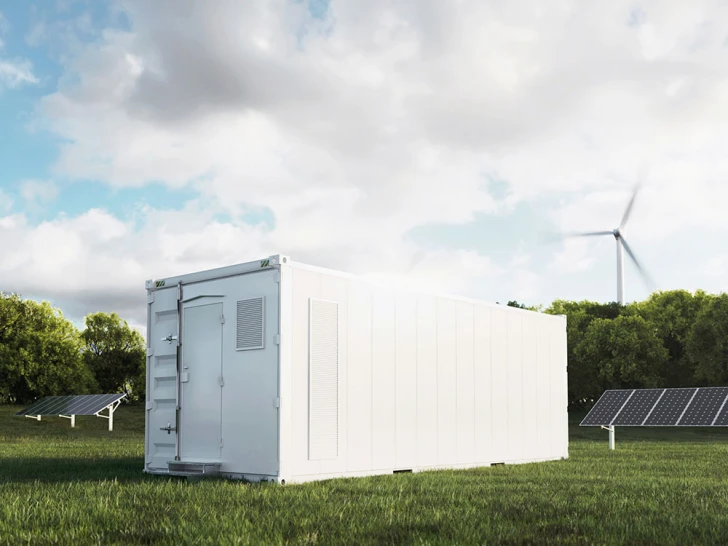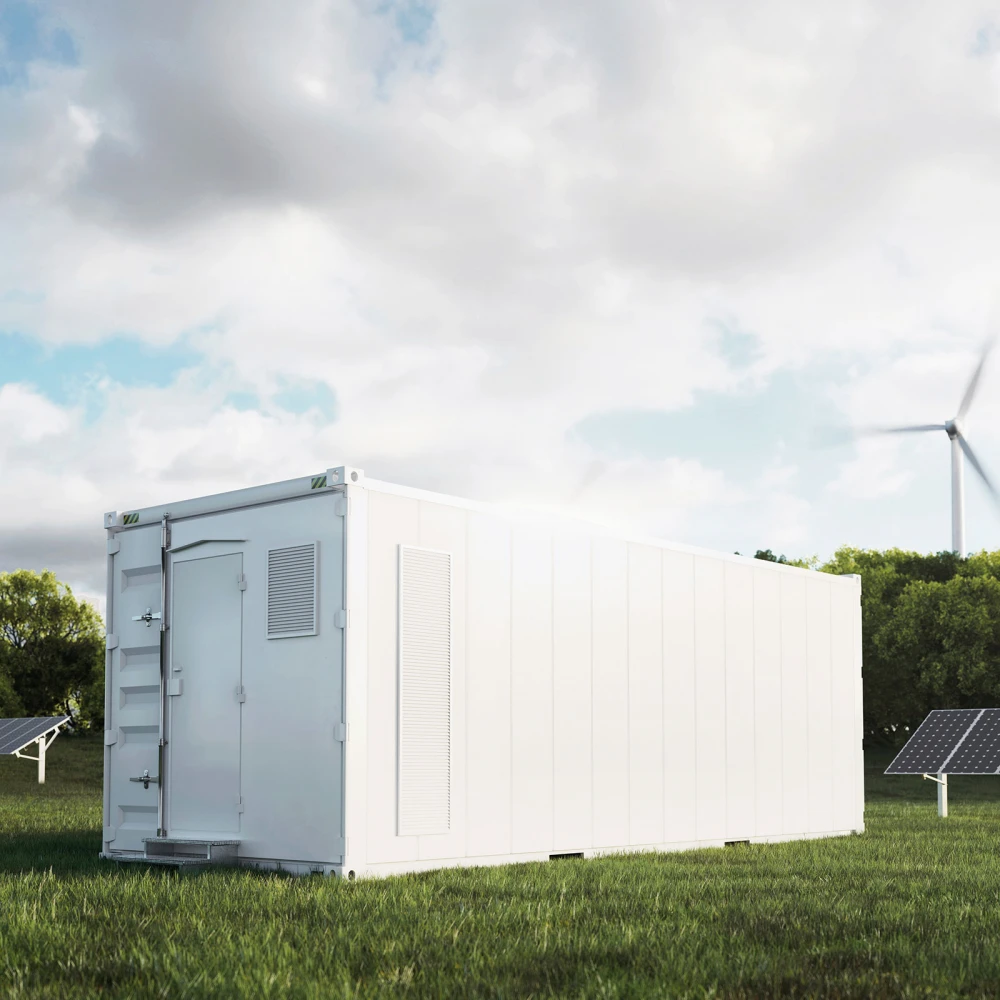
Large white container on a green field with solar panels and a wind turbine in the background

Storage solutions

Storage solutions are essential for the energy transition 2.0. They optimize the use of power from renewable sources by storing excess energy during peak production times and making it available again during low wind and solar conditions.

Contact

Storage solutions: a key to energy transition 2.0

One of the biggest challenges of renewable energies is the fluctuating power generation: Photovoltaic and wind turbine installations produce varying amounts of energy depending on the time of day and weather conditions. This is precisely where storage technologies come into play. They absorb excess energy generated during high wind and sun conditions, release it during periods of low yield, and thus stabilize the power grid. Whether battery storage or other technologies – they are the key to a secure and reliable power supply, replacing fossil fuels and laying the foundation for a stable, sustainable energy system.

Numbers and facts: focus on battery storage

Both small and large battery storages significantly contribute to creating a sustainable and stable energy system. A look at current figures and forecasts shows how rapidly these technologies are evolving.

How much power do large battery storages currently provide?

2.5 GW

are currently in operation at large battery storages in Germany. (As of: November 2024).

What is the goal for 2045?

54 GW

the capacity of large battery storage is expected to increase by 2045, according to the federal government's grid development plan.

What role do small battery storages play?

13 GW

in performance is currently in operation in the form of small battery storages in Germany (as of November 2024).

What is the total potential in the grid?

113 GW

the performance of small-scale battery storage is projected until 2045, according to the grid development plan.

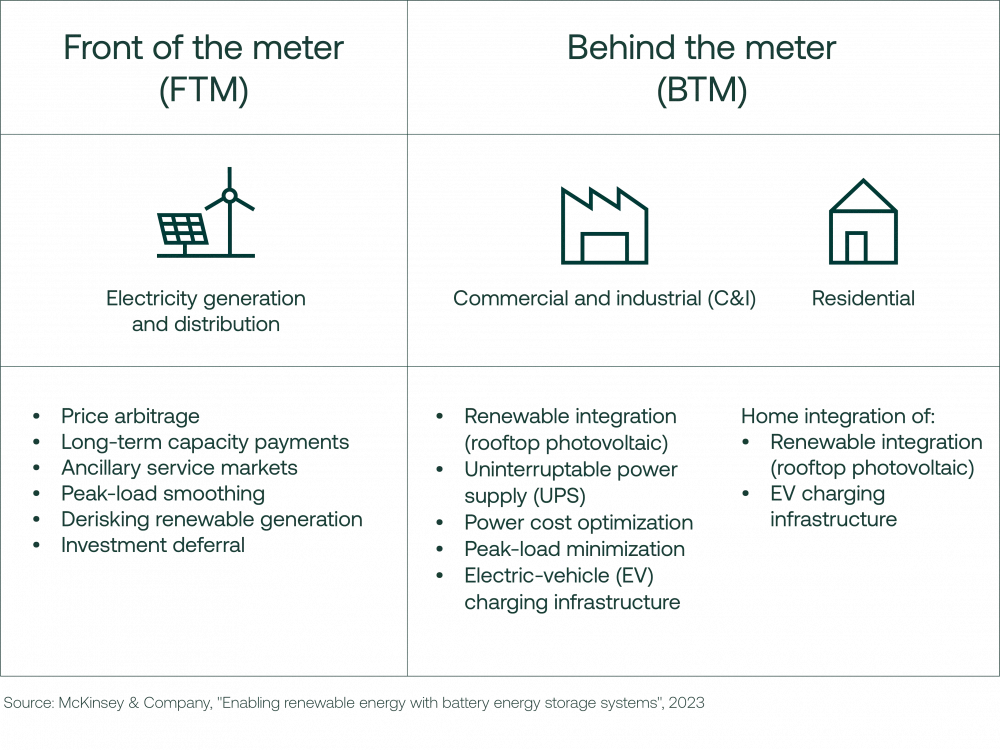
Application areas of storages: flexibly usable, both Front of the Meter (FTM) and Behind the Meter (BTM)

Storage technologies are versatile as they can be flexibly adapted to individual requirements and diverse areas of application. Two main categories are distinguished: "Front of the Meter" (FTM) and "Behind the Meter" (BTM).

  • FTM storage systems are located before the meter and are directly connected to the power grid. These large systems, with capacities ranging from 5 to 300 MW, optimize the use of renewable energy by smoothing generation fluctuations and reducing curtailments. Additionally, they stabilize the grid through ancillary services and reduce the need for expensive grid expansions.

  • BTM storage systems are installed after the meter and are connected to the local network of households or businesses. With capacities ranging from 3 kW to 5 MW, they increase grid independence, store excess PV power, and ensure energy supply during grid outages. For households and businesses, this means lower electricity costs, more self-consumption, and a contribution to CO₂ reduction – also ideal for electric mobility or off-grid solutions.

Benefits at a glance

Stability for the power grid

Storage solutions secure the power supply by cushioning production peaks and enabling more consistent energy availability. They stabilize the grid and contribute to ensuring a reliable and resilient energy supply – a win for the energy transition 2.0 and for communities becoming more independent from the national grid.

CO₂

CO₂ reduction through more renewable energy

Stored electricity from times of high sun and wind can be fed into the grid during low production periods. This increases the share of renewable energies and reduces the need for conventional power plants. This saves CO₂ and actively drives decarbonization.

Control energy and energy transition 2.0

Storage provides control energy, which is energy that can be called up at short notice to balance fluctuations in the power grid and maintain grid frequency. They create the foundation for further expansion of photovoltaic and wind turbine installations, even with high proportions of volatile energies. Thus, storage becomes an indispensable component of the energy transition 2.0.

Our commitment to a sustainable energy future

Two people standing in a meadow looking into the distance, one raising their hand as if pointing something out
Partnership approach

Shaping the future of energy together

EEF relies on strong partnerships to successfully implement storage solutions. In close collaboration with local communities and partners, we create projects that take into account regional needs and circumstances. Complemented by our network of universities, research institutions, and technology companies, we develop innovative concepts and implement them together in practice - such as through large-scale storage projects in our hybrid parks.

Learn more
Man in a blue shirt kneeling in grass, carefully examining a plant
Responsibility & Sustainability

Technologies in harmony with nature

Storage technologies at EEF are developed not only for the energy transition but also with consideration for the environment. In combination with our wind and PV projects, we focus on the conservation of wildlife and plant life and minimize interventions in natural habitats. Through close cooperation with research institutes and the implementation of pilot projects, sustainable solutions are created that promote both climate protection and biodiversity.

Learn more
Innovation & Technology

Drive innovation. Shape the future.

Innovative storage technologies

Smart energy concepts

Large white container with solar panels and a wind turbine in the background
Large white container in grass field with solar panels and wind turbine in the background
Innovative Storage Technologies

Next-generation storage technologies open up new possibilities: in addition to proven lithium-ion batteries, we are investing in innovative alternatives such as redox flow and solid-state batteries, as well as hydrogen storage. This leads to versatile, more sustainable, and efficient solutions that can be optimally used depending on project requirements.

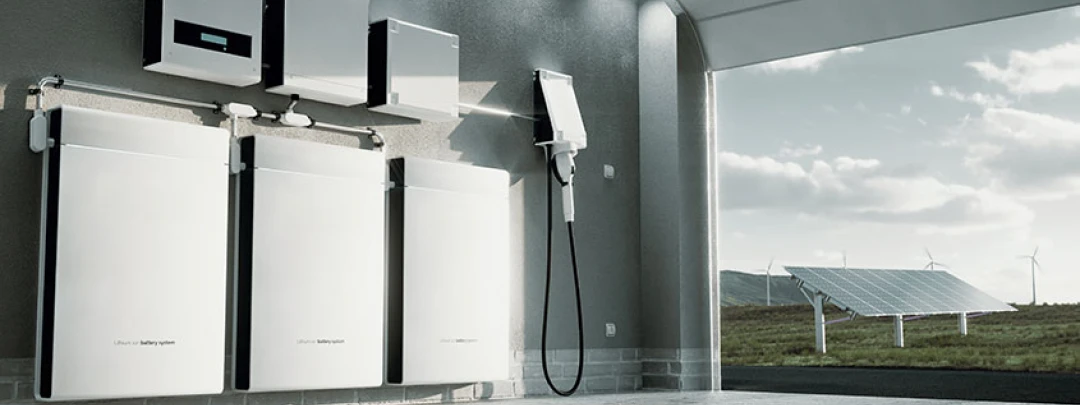
Modern energy supply system in a building with solar panels and wind turbines in the background
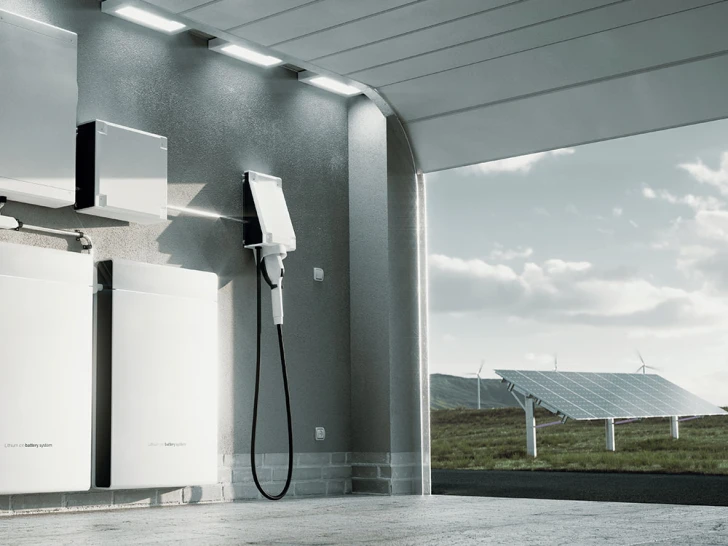
Modern electric vehicle charging station with solar panels and wind turbines in the background
Smart energy concepts

With AI-based operational management, we optimize the interplay of energy production, storage, and distribution. Our smart concepts enable more efficient operation of storage systems and maximize the use of renewable energies – for a smart and sustainable energy supply.

Graphic representation of various renewable energy technologies and their use in mobility and industry
Hybrid parks

Storage technologies in hybrid power plants

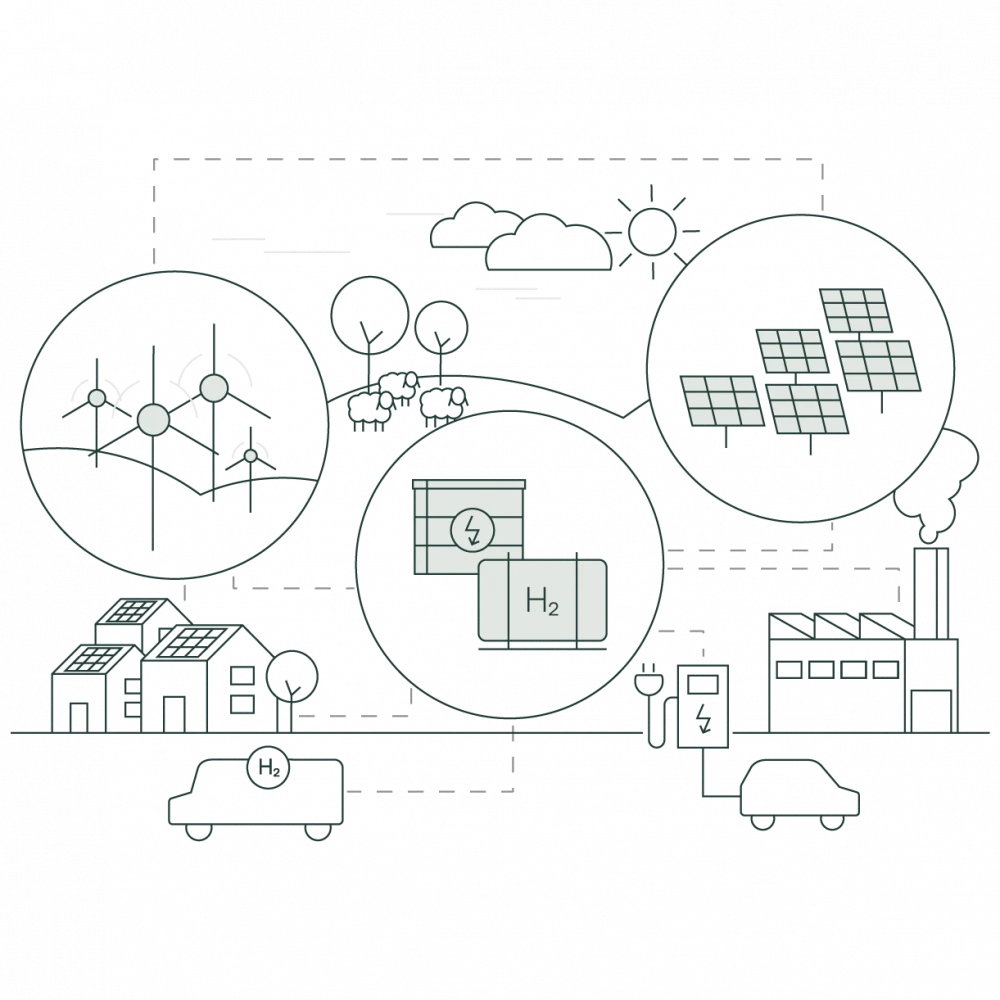
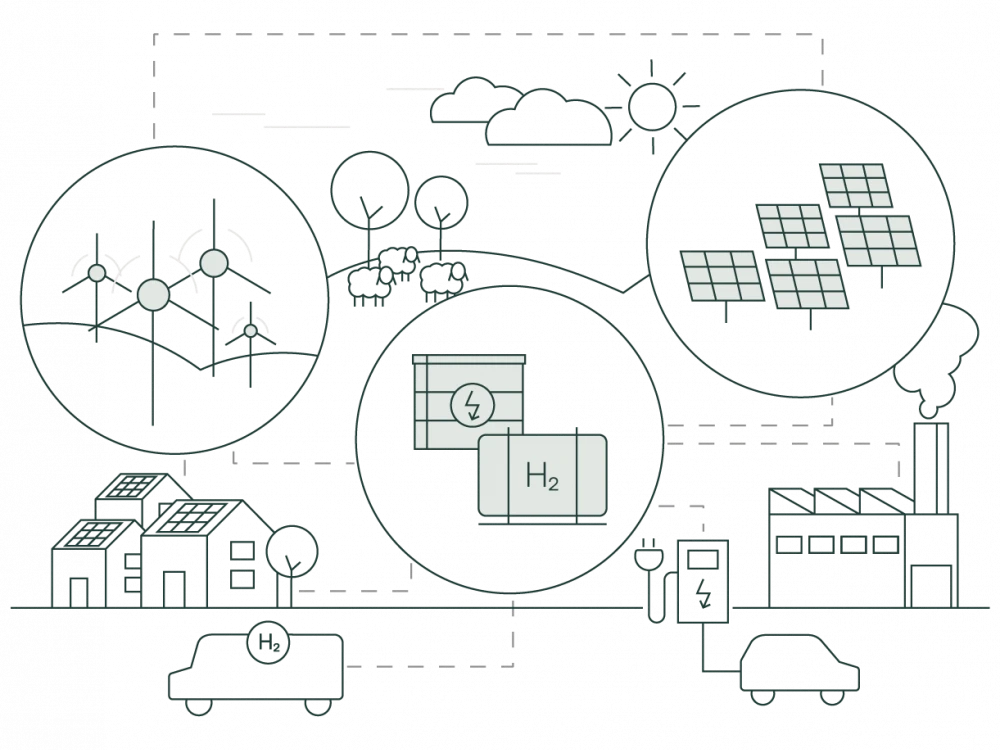
Hybrid parks combine wind and photovoltaics with powerful storage systems in a holistic, forward-looking energy concept. While solar power plants deliver maximum yields during the day and wind turbines generate energy continuously at night, storage systems ensure the perfect interplay of energy sources. They balance production fluctuations, stabilize the grid, and provide energy precisely when it's needed. This creates a reliable, efficient, and sustainable power supply—a crucial step towards a flexible and independent energy future.

Our projects

Innovations for a sustainable future

Project Beckum: Wind energy for a strong region – how local energy projects shape the future.

Learn more