Wind turbine against a clear blue sky

Wind power

Wind energy is one of the key components for a climate-neutral future. Modern wind turbines harness the natural power of the wind to generate clean and renewable energy. This not only significantly contributes to the reduction of CO₂ emissions but also supports a stable and sustainable energy supply. Thus, wind power is essential for making the energy of tomorrow available today.

Contact

Wind Energy: driver of the energy transition 2.0

Wind turbines utilize the kinetic energy of the wind and efficiently convert it into electrical energy without emissions, at the highest level of technology. With rapid technological advancements, modern facilities achieve a new dimension in performance and land use. Every component, from the precise construction of rotor blades to intelligent grid adaptation, is designed to maximize the use of clean energy. With hub heights of up to 200 meters and powerful machines of over 7 MW, wind power sets new standards for a sustainable energy future.

Wind Energy: numbers that speak for themselves.

With a strong pipeline of projects, we make a significant contribution to the energy transition 2.0 and drive the expansion of wind power.

Installed Capacity

72.700

In Germany, by the end of 2024, more than 30,000 wind turbines with a total capacity of around 72,700 megawatts will be operational.

Number of wind turbines

28.766

In the year 2024, 28,766 wind turbines were counted onshore in Germany.

EEF in the Market

+ 1,600 MW

With a growing pipeline of planned, approved, and under construction projects, EEF strengthens the expansion of wind power.
Usage

Producing, Heating, Moving

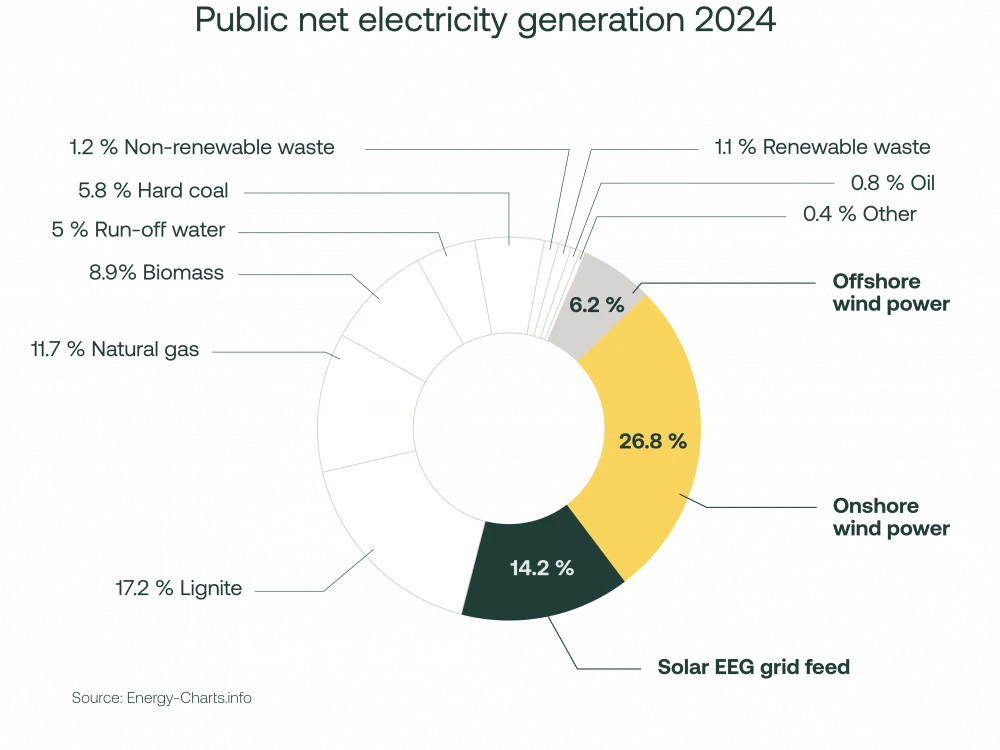
Wind power is the powerful core of renewable energy and forms the foundation of our holistic energy vision. The graphic shows that wind energy holds a significant share of public net electricity generation in 2024, making a crucial contribution to supply security. Through strategic and forward-thinking measures, EEF promotes the expansion of this key technology for a sustainable energy future.

Advantages at a glance

Maximum energy yields with minimal space requirements

Wind turbines deliver high energy yields while requiring little space. They enable optimal land use, creating attractive income opportunities for landowners. They can also be integrated in a way that allows agricultural use to continue – an aspect that EEF specifically considers in its planning.

Competitive and economically strong

Wind power is among the most cost-efficient energy sources, offering some of the lowest electricity production costs. Its high efficiency makes it an economically compelling investment with attractive profitability potential – a resilient solution for sustainable energy production in any region.

Independence for resource-poor countries

The expansion of wind power reduces dependence on energy imports and fossil fuels. Resource-poor countries benefit long-term from stable, cost-efficient electricity production. For Germany, this means significant economic benefits and increased security of supply.

Engine for new jobs

The expansion of wind power creates numerous jobs along the entire value chain, from planning and construction to maintenance. As the leading sector in renewable energies, it drives employment and economic growth sustainably.

Our commitment to a sustainable energy world

Two people performing a fingertip grip handshake, with blurry greenery and autumn leaves in the background
Partnership approach

Together for the region

EEF works hand in hand with stakeholders such as local communities, landowners, and heritage conservation authorities to integrate wind power projects harmoniously into the environment. The selection and placement of the facilities are specifically aimed at minimizing the impact on the landscape. Each facility is carefully planned to respect the overall image of the region and blend into the landscape as well as possible. Together with local partners, we develop solutions that meet local needs and promote acceptance. Our projects combine technological progress with a clear focus on the quality of life of the region and its residents.

Learn more
A duck standing on a rock in the water of a calm lake
Responsibility and Sustainability

Energy for tomorrow, responsibility today

EEF prioritizes the protection of wildlife and plant life in every wind power project. Through avifaunal assessments and detailed studies, we identify protective measures for wind-sensitive species. Thoughtful land intervention, accompanied by ecological construction supervision, and the establishment of compensation areas in collaboration with partners help safeguard habitats while integrating renewable energy with ecological responsibility. We develop creative solutions for compensation and mitigation measures in coordination with authorities.

Learn more
Innovation & Technology

Rethinking wind power

At EEF, innovation means rethinking, acting boldly, and pushing boundaries. With cutting-edge technologies, AI-based processes, and an experienced team, we shape wind power projects that are not only more efficient but also more sustainable and forward-looking.

Artificial intelligence

Facility repowering

Next-gen wind technology

Woman in a field holding a tablet and examining plants
Woman in white cap and black jacket holding a tablet standing among tall plants in a field
AI: Efficiency at a new level

Wind turbines deliver high energy yields while requiring little space. They enable optimal land use and create attractive income opportunities for landowners - for optimizing yields and in the proactive planning of maintenance and renewal.

Construction of a wind turbine using a crane on an open field, surrounded by more wind turbines and a blue sky with clouds
Construction of a wind turbine with a crane under a cloudy sky
Repowering: Sustainably renew

EEF collaborates with partners in repowering who responsibly handle recycling and disposal. By dismantling existing facilities and constructing the latest plants, EEF not only contributes to increased efficiency but also actively promotes a sustainable circular economy.

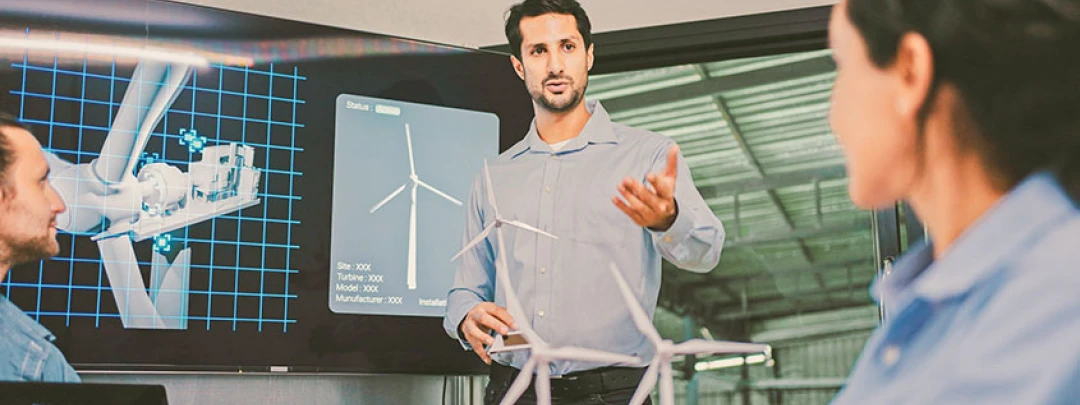
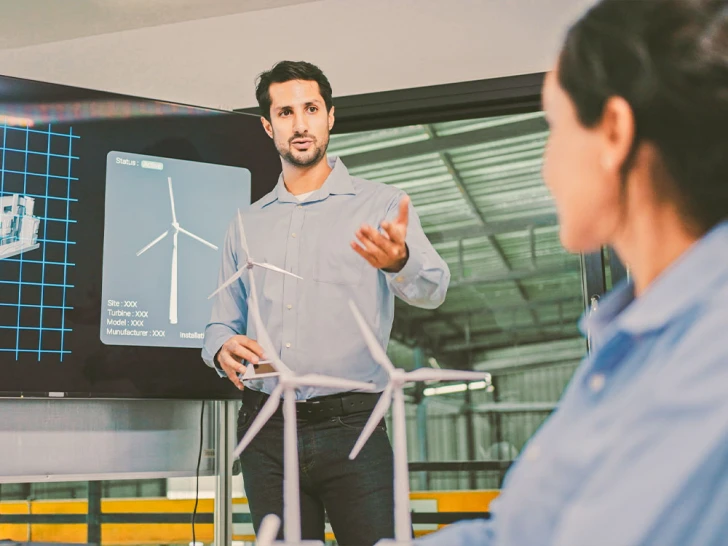
Man presenting wind turbine designs on a screen to colleagues in an office
A man presenting wind power technology in a modern office, gesturing next to a model wind turbine and a digital display
Technology: Next-generation wind power

EEF maintains close communication with manufacturers to continuously integrate the latest and most efficient technologies. We are already planning wind turbines that will lead in technology and ensure the highest efficiency even five years from now. By using cutting-edge turbines, we maximize energy yield and reduce operational costs.

From wind to electricity: how the process works

The conversion of wind into energy occurs in multiple steps – a process in which every component perfectly interlocks.

1

Utilizing kinetic energy

The rotor blades of the wind turbine capture the wind's kinetic energy. Due to their aerodynamic shape, they begin to rotate even at low wind speeds.

2

Generating rotational energy

The rotor blades are connected to the hub, which in turn is connected to the main shaft inside the nacelle. The shaft transfers the mechanical energy of the rotational motion.

3

Energy conversion

A gearbox converts the rotational motion to higher speeds that drive the generator.

4

Generating electrical energy

The generator converts mechanical energy into electrical energy by using rotational motion to generate electricity through electromagnetic induction.

5

Adjust voltage and frequency

Since the generator produces variable alternating current, it is first converted into direct current using a converter and then converted back into alternating current with a constant grid frequency (50 Hz).

6

Feeding into the power grid

The generated alternating current is stepped up to the grid voltage via transformers and fed into the public power grid. From there, it reaches households, businesses, and industry.

Graphic representation of various renewable energy sources and their applications, including wind power, solar energy, and hydrogen technology
Hybrid parks

Renewable energies in perfect synergy

Wind energy forms the core of hybrid power plants, ensuring a stable power supply - especially at night when solar power plants do not generate electricity. Together with storage systems, it ensures that energy is used efficiently and made available when needed. Through the smart integration of wind power with photovoltaics, conversion technologies, and storage systems, solutions are created that are optimally tailored to local conditions. Thus, we create holistic energy concepts that combine efficiency, security of supply and sustainability.

Our projects

Innovations for a sustainable future

Project Beckum: Wind energy for a strong region – how local energy projects shape the future.

Learn more