Regional partnerships: A win for everyone
EEF pursues a clear strategy: Local partners to find on-site, who play a crucial role in the implementation of projects. It's not just about Services from the region, but generally about promoting a sustainable regional value creation.
Collaboration with local businesses and craft companiesfully taps into the economic potential of the region.
Expert assessments from the region: Utilizing specific local expertise
Among other things, the involvement of regionally based assessors is an essential part of the EEF strategy. Local experts are well acquainted with the specific conditions of their region – and can provide valuable insights that are often missing in broader assessments. Their Know-How contributes to ensuring that the projects not only meet current legal requirements match, but are also optimally adapted to the local conditions.
Synergies through regional networks
Collaboration leads to major joint initiatives that extend far beyond the individual project: networks are strengthened broadly, knowledge and resources are pooled – thereby laying the foundation for sustainable development of the entire region. The wonderful effect: it leads not only to a stronger establishment of projects in the region but also to greater acceptance among the population.
More jobs in rural areas
The good news is: Economic strengthening also brings new jobs. The creation of jobs is a direct and measurable effect resulting from the energy projects.
But it's about much more than just impressive numbers: New jobs are something tangible. They also mean new perspectives for the people in the region. They create opportunities for young people to stay in their homeland instead of having to migrate to cities. At the same time, this attracts professionals to, who contribute with their knowledge and experience to further strengthen the regional economy.
Boosting economic power: With a truly sustainable approach
EEF pursues a thoroughly future-proof approach in boosting economic strength away from urban sprawls. This means that the focus is not only on short-term profits – but long-term effects are sought.
In other words: By investing in renewable energies and promoting local businesses, an overall solid foundation for the future is created. This is crucial for maintaining and expanding economic stability in the long term.
Renewable energies as a driver of development
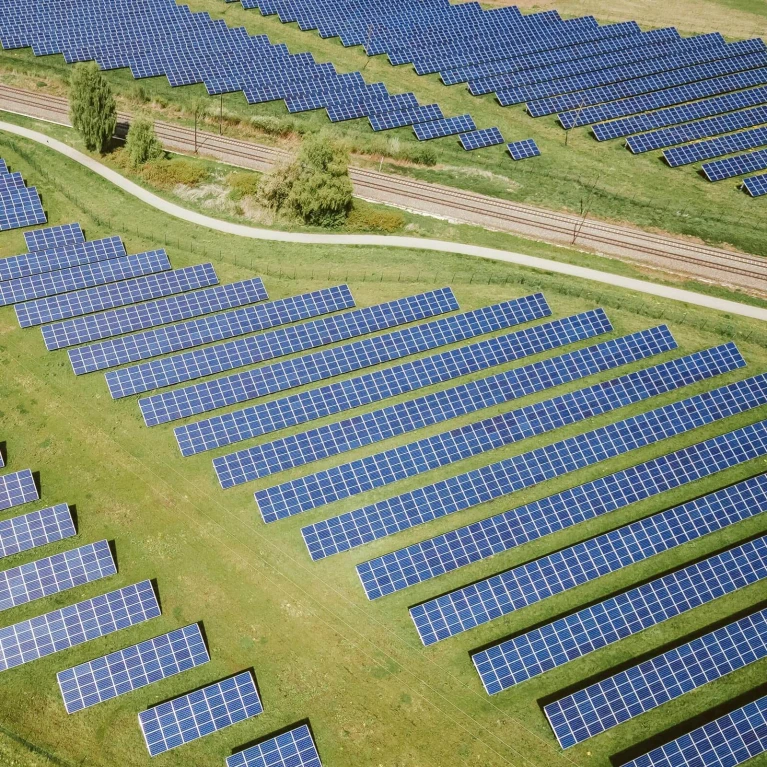
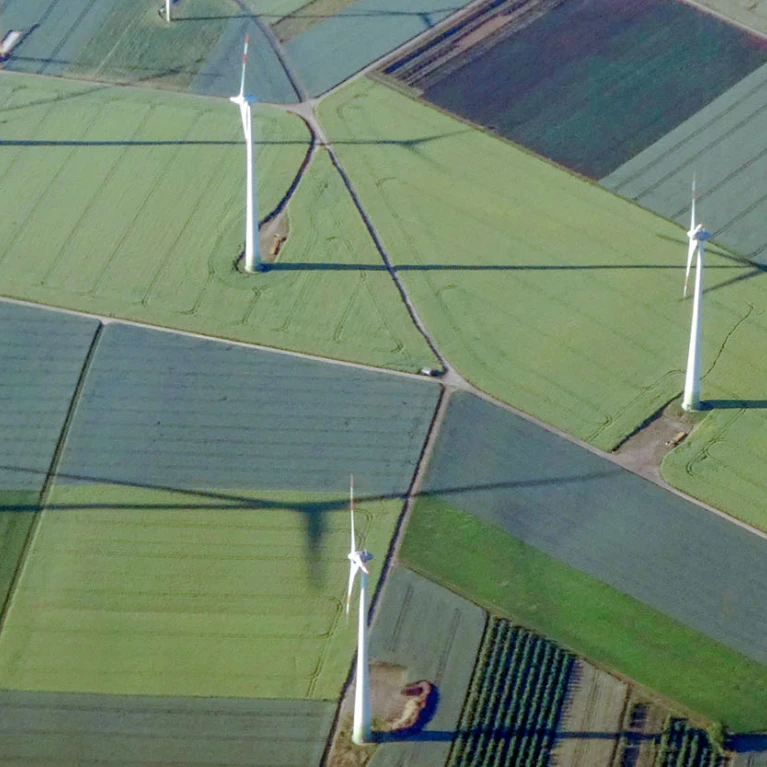
To put it clearly: The promotion of renewable energies plays a key role in strengthening rural areas.Solar power plants, wind turbines, energy storage and other technologies eignen sich exzellent, um die Energieversorgung vor Ort zu sichern – und gleichzeitig einen Beitrag zum Klimaschutz zu leisten.
Thus, rural areas can become leaders in sustainability on all levels – both socially and environmentally.
The importance of new energy producers and storage in rural areas
Indeed: Energy producers and storage are a central element to Security of supplyto ensure widespread coverage. They allow for the storage of excess energy from photovoltaic systems for later use as needed. This is particularly important in areas with fluctuating energy supply, as is common in many parts of Germany.
By combining renewable energies and modern storage systems, on the other hand, a stable and reliable energy supply is ensured, which remains effective even during times of crisis. To achieve this, AI operating systems now also make a valuable contribution.
Regional autonomy through energy independence
This leads to another major advantage: the increase in regional energy autonomy. Rural communities can increasingly take control of their energy supply thanks to storage facilities, large photovoltaic systems, and wind parks.
This means: They are less dependent on external energy sources and traditional power companies. This not only strengthens the Resilience of the communities, but also contributes to economic independence by hedging against global price fluctuations.
The rural area as an economic engine of Germany
So, where does this new path lead? Yes, through targeted promotion of rural areas, a significant contribution can be made to strengthen Germany's economic position. The economic disparity between urban and rural areas is reduced, and the rural area develops into an attractive location for investors.
Education and further training: an investment in the future
EEF takes it a step further here. It also sees the promotion of education and further training as a central component for a successful future away from cities.
Through the collaboration with local educational institutions and the creation of training positions in the field of renewable energies, young people are attracted to the regions. At the same time, it ensures that the necessary skilled workers are trained locally and are available in the long term.
Increased attractiveness through improved quality of life
Investing in renewable resources pays off comprehensively and personally for individuals of all ages. What does this mean? Well: The countryside offers not only economic opportunities but has also traditionally provided a potentially high quality of life.
By creating jobs, expanding infrastructure, and promoting education and culture, rural areas become even more attractive to young families and professionals. Consequently, what can be expected is: population growth and a stronger identification of people with their region.
Preserving culture and community interaction
EEF supports local initiatives and projects that strengthen the sense of community and people's identification with their region. This can be in the form of supporting cultural projects, regional festivals, or social institutions happening. The fact is: A strong regional identity significantly contributes to the long-term stability and attractiveness of rural areas.
Innovative concepts for sustainable success
In summary, this means only one thing: Innovative players like EEF are already developing concepts ideally tailored to the specific needs and challenges of rural areas. This includes not only technical solutions – but also social and economic approaches, that make rural areas sustainable for the future.
Collaborative cooperation as a guarantee of success
It cannot be overstated: the success of projects in rural areas largely depends on thepartnership cooperation of all participantsForward-thinking companies like EEF place great emphasis on such close cooperation with municipalities, businesses, and the local population. Through open dialogue and transparent communication, the needs of all participants are considered and integrated into the projects. This is indispensable.
A guiding principle above all
Sustainability is more than just a buzzword - it is a guiding principle to which EEF is committed. This not only means that our projects are in line with environmental protection principles. It also means that we seriously consider social and economic sustainability take into account.
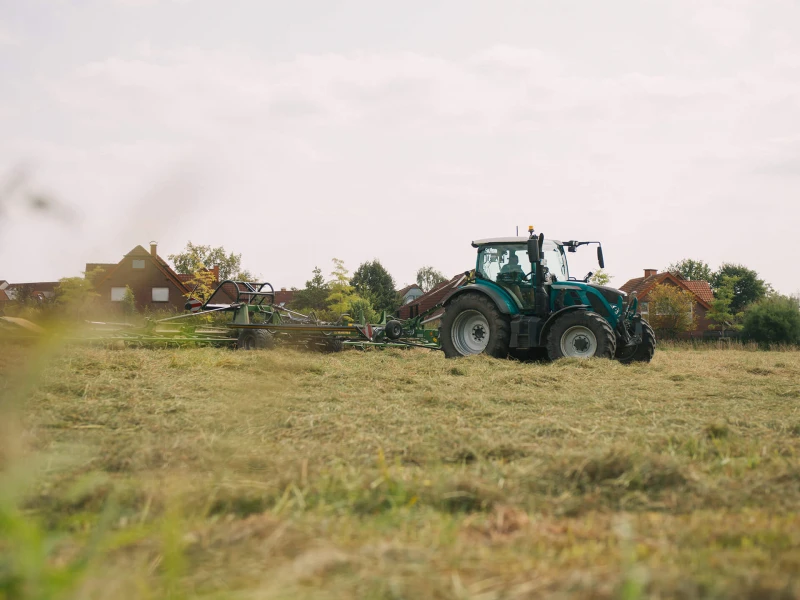
Rural areas face enormous challenges, but also tremendous opportunities. Initiatives and planning projects like those from EEF offer the opportunity to play to strengths in the best possible way. Yes, turning fields and meadows into places where people become outstandingly productive in the best sense.
A Look into the Future: Green Areas as Pioneers
Rural areas are associated with the potential to take a leading role in many areas as a pioneer to assume – be it in the use of renewable energy, the creation of new jobs, or the development of innovative concepts.
With the right support and the appropriate partners by their side, the various regions of Germany can become a true model for sustainable development – whether in Schleswig-Holstein, Saxony-Anhalt, or Bavaria.
EEF is ready to make this vision a reality. Together with you? Absolutely. Let's tackle it.