
'Seewald' is loading ... just a moment
0 %

Our Projects

Seewald

Location

Seewald, Baden-Württemberg, DE

Start

Q1 2025

Energy

Wind

Status

Under construction

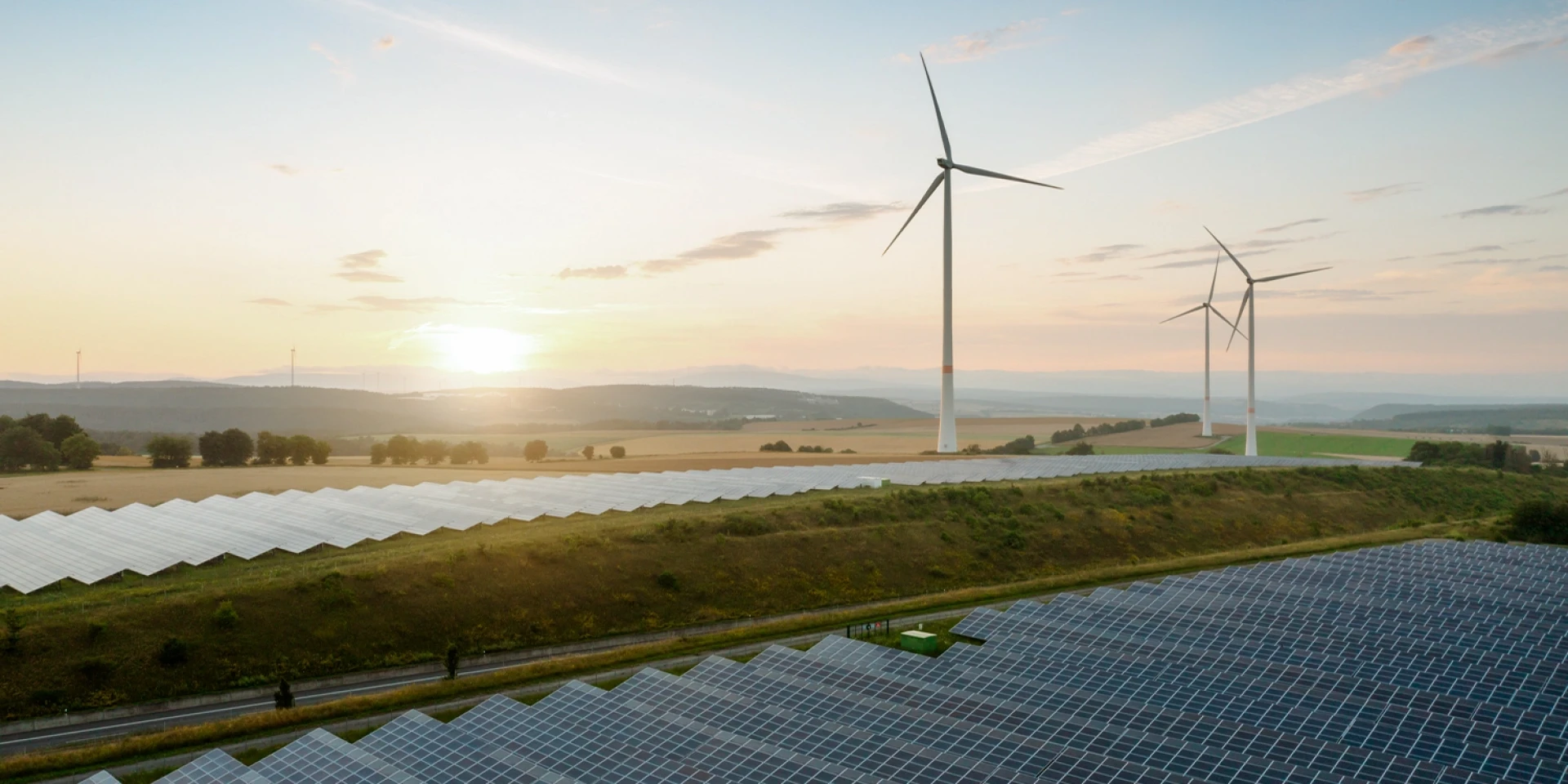
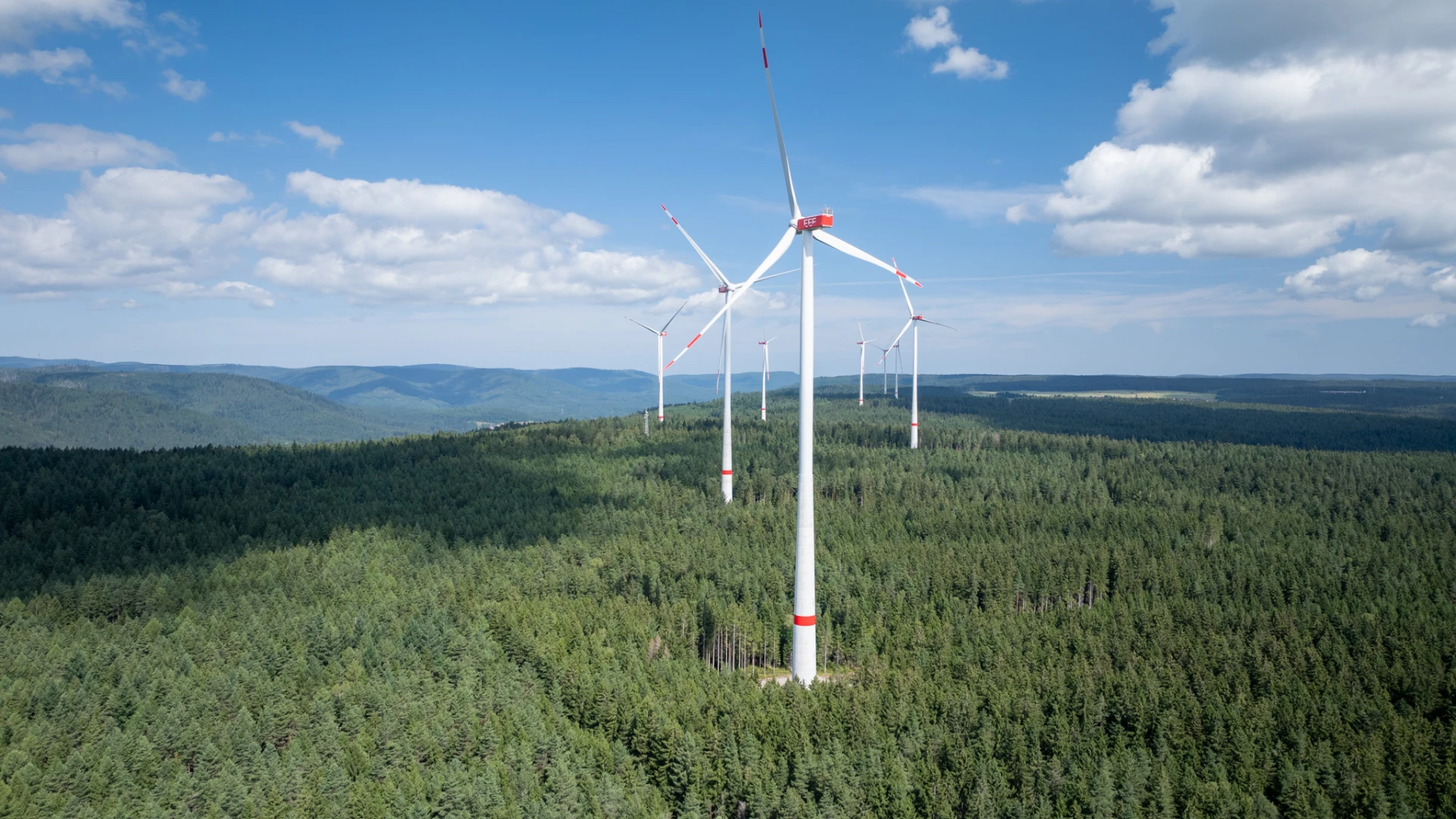
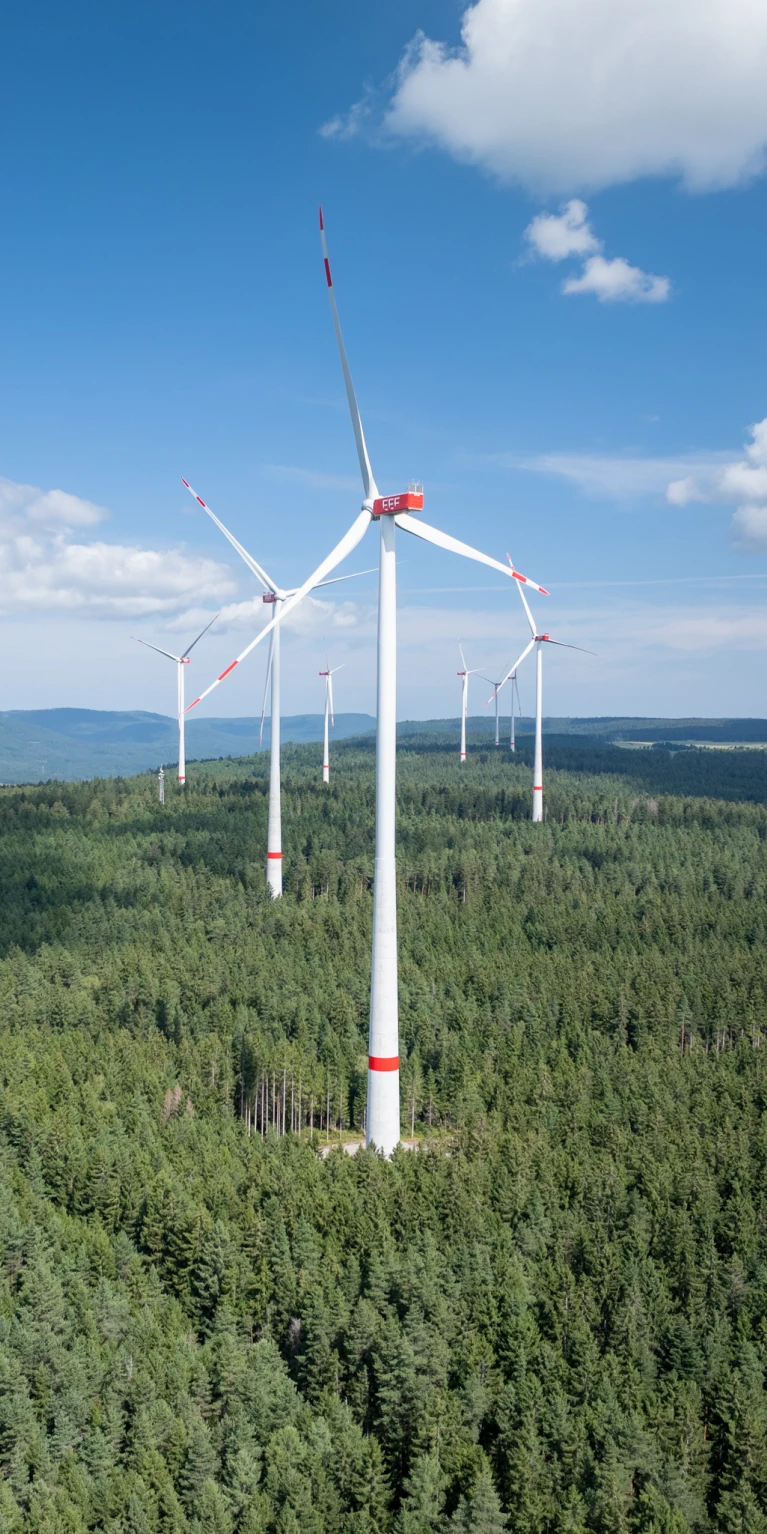
The image is for illustration purposes only. Changes and deviations in the final project course are reserved.
The image is solely for illustration purposes. Changes and deviations in the final project course are reserved. For the best possible experience, we recommend using a desktop device – only selected sections are visible on mobile devices.

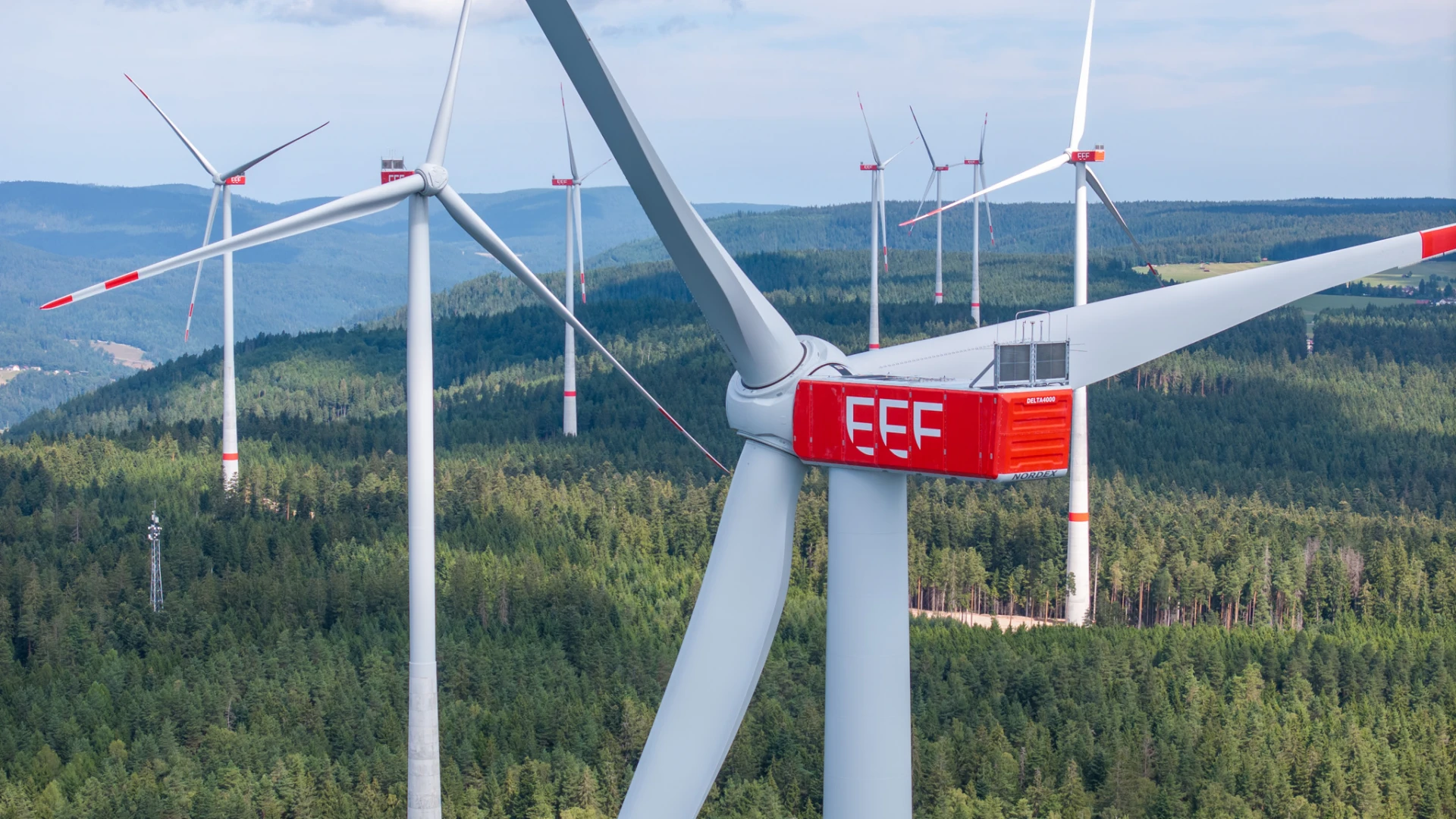
With eight facilities and a total capacity of 44.7 MW, Seewald is among the largest wind projects in the region - a significant step for the Energy transition 2.0 in the southwest and a clear signal for a sustainable energy infrastructure.

8 Wind turbines (WTs) are being constructed in Seewald.
44.7 MW The total output of the Seewald wind park is achieved annually.
28,500 On average per year, Seewald supplies electricity to 28,500 households.
75,600 Tons of CO₂ are saved annually on average.

Our approach: Energy transition 2.0

EEF stands for Energy transition 2.0 – a new generation of sustainable energy projects. Our solutions go beyond mere electricity production: they are decentralized, locally effective, and digitally interconnected. Thus, we create real added value – ecologically, economically, and socially.

Wind power with foresight

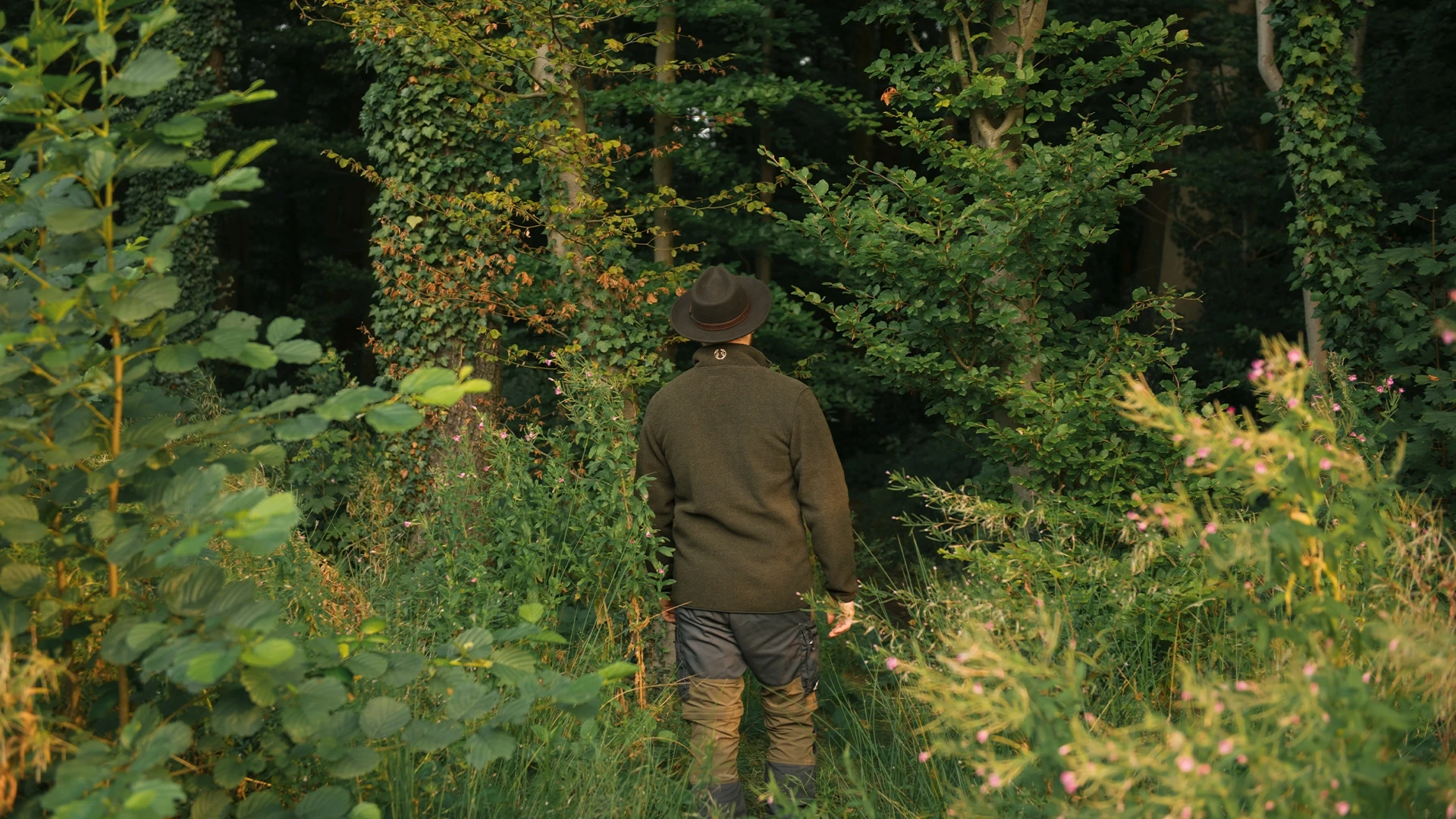
In the heart of the Black Forest, one of the largest wind projects in Baden-Württemberg is emerging – a pioneering step for the regional expansion of renewable energies. In the district of Besenfeld in Freudenstadt county, EEF demonstrates how Energy transition 2.0 works: decentralized, technologically forward-thinking, and in close collaboration with the region. Especially in a state with limited wind infrastructure but high industrial energy demand, the Seewald wind park complements photovoltaics – particularly during the dark winter months. A potential (energy/battery) storage solution is also intended to enhance grid stability and security of supply. Seewald clearly shows: the energy transition is not just feasible in the north, but also requires pioneer projects in rural areas – in the forest, on-site, in dialogue with the region.

Show responsibility. Create added value. Act together.

EEF develops projects like Seewald always in dialogue with the local people. Our commitment: We create not only clean electricity but also social and ecological added value.

The surrounding communities directly benefit from the Seewald wind park – through participation under §6 Renewable Energy Sources Act (EEG) with 0.2 cents per kilowatt-hour fed into the grid. Additionally, we support local clubs, organizations, and initiatives throughout the operational duration of the project.

At the same time, we implement targeted ecological measures that strengthen nature and biodiversity. Thus, a project emerges in Seewald that combines technological innovation, regional value creation, and responsibility for the environment and society.

Compensatory and substitution measures

  • New habitats

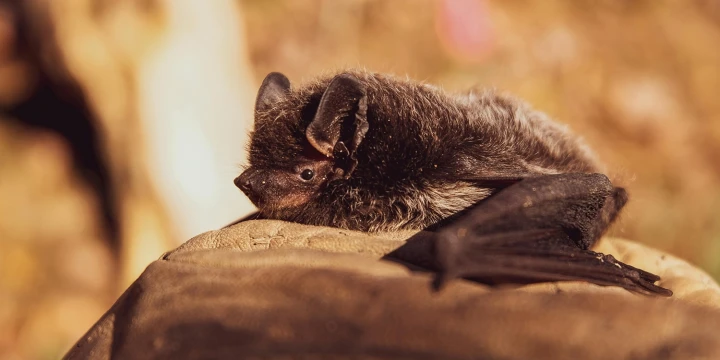
    Artificial quarters for bats and nesting aids for cavity-nesting birds create additional habitat in the forest. This strengthens species that rely on natural structures but often lose refuges due to forest conversion or timber use.

  • Initial afforestation

    New trees are planted on suitable areas, expanding and stabilizing the natural space. This not only grows new forests but also contributes to climate protection and recreation for future generations.

  • Forest conversion

    Coniferous forests distant from natural conditions are gradually transformed into climate-resilient mixed deciduous forests – such as lime-beech or black alder-ash forests. This creates diverse ecosystems that are better able to withstand heat and drought and promote biodiversity.

Transparency

creates trust

For us, Energy transition 2.0 means making development tangible. We show the milestones that shape a project, where we stand, and what comes next – openly and collaboratively. Seewald represents progress in the southwest. From approval through construction to the first power feed-in – here we document the key steps.

(Project) milestones

The project highlights

Two people shaking hands in an office

Approval according to BImSchG and EEG allocation

Completed

In April 2023, the Seewald wind park received the BImSchG approval for eight wind turbines. The application was filed by Altus as the original developer. In early 2025, the amendment approval followed to switch to Nordex plant technology – for increased efficiency and future viability.

Crane area in the woods

Access roads and crane pads

Completed

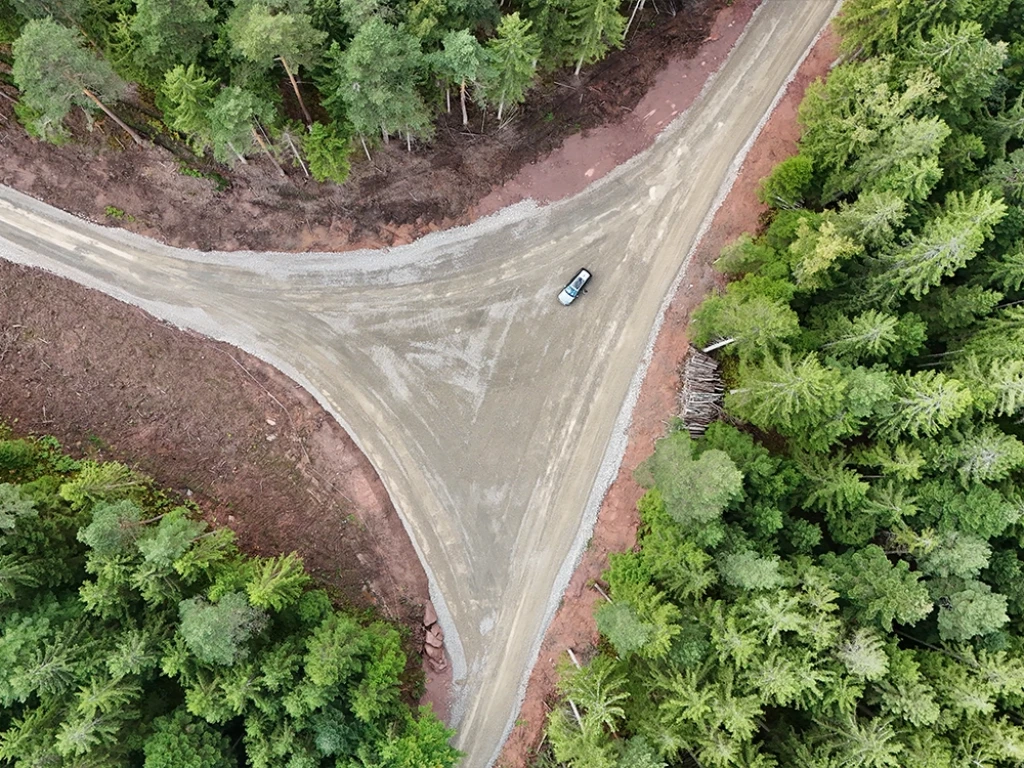
In the first quarter of 2025, work will begin on access roads and crane pads. Existing forest tracks will be utilized and specifically expanded to ensure access for heavy transport. Once the facilities are completed, the roads will be reduced in size and partially dismantled, while maintaining permanent accessibility for emergency vehicles.

The Base

Foundation construction

Completed

Starting in May 2025, the foundations will be constructed by Max Bögl. They form a stable base for towers over 200 meters high and mark the transition from the planning to the construction phase.

Projectmanager is pointing to a map

Project takeover

Completed

In September 2025, EEF will take over the Seewald wind park from KMW AG, the parent company of the previous project developer ALTUS renewables GmbH. ALTUS has successfully developed the project until the handover and continues to closely support the construction as a partner. With the acquisition, EEF expands its portfolio to include a project of high regional and ecological significance.

To the press release

Facility construction

Completed

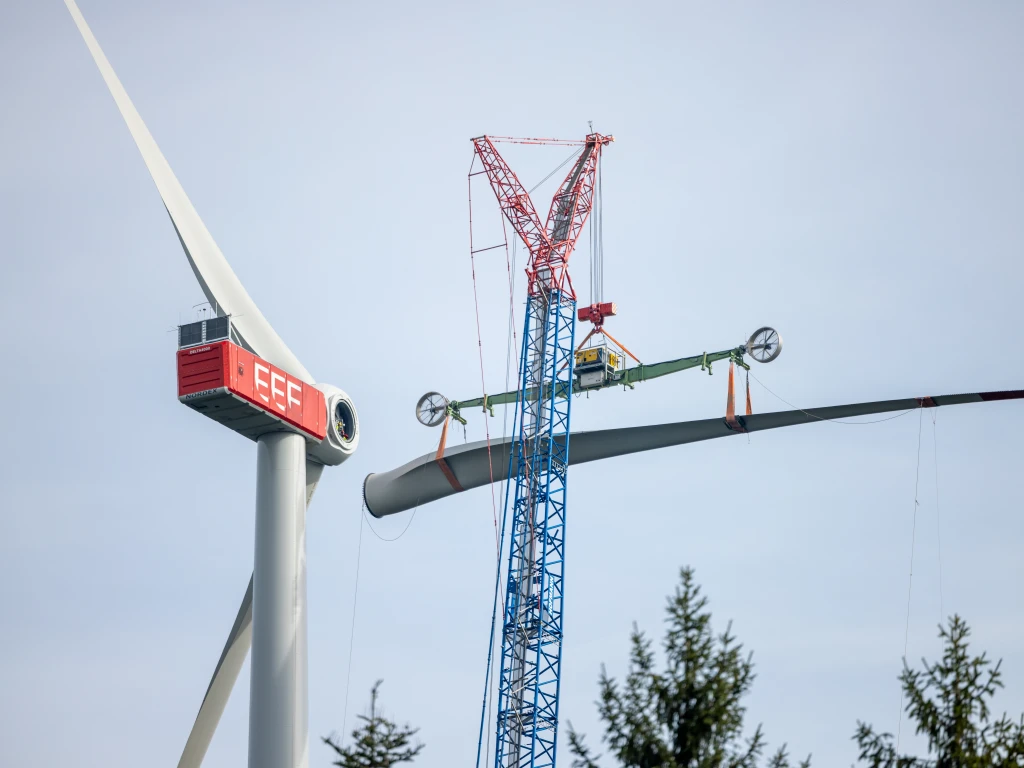
Starting in October 2025, the first visible steps begin: delivery and assembly of the concrete tower sections. In January 2026, the major components – steel tube towers, nacelles, and rotor blades follow. From February 2026, the facilities will be erected.

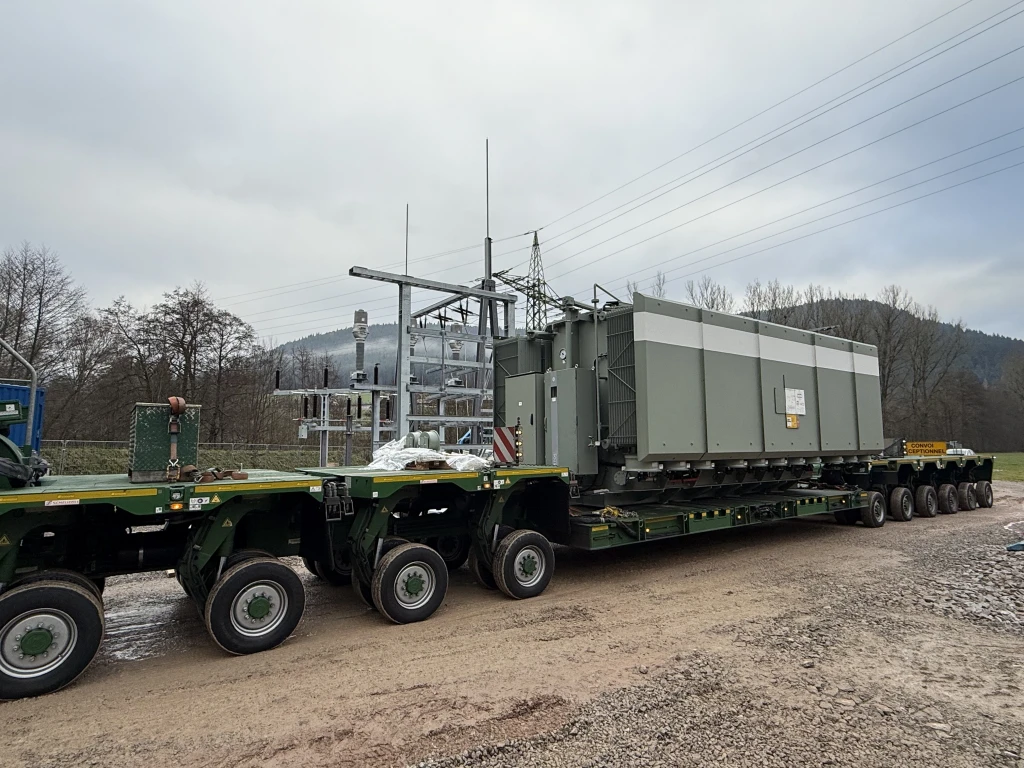
Delivery of transformer station

Cable construction and grid connection

Under construction

In parallel, the electrical connection is being prepared. Cable routes connect the facilities to the new Seewald substation, creating a strong network node that not only enables power feed-in but also strengthens the regional infrastructure in the long term.

Park festival

In planning

2026, the completion of the construction phase will be celebrated with a park festival - a moment to make the energy transition visible in the region and to honor a milestone together with citizens and partners.

Completion

In planning

From August 2026, the commissioning begins. Facility by facility will be connected to the grid until the entire park is operational. With each step, the regional security of supply with renewable energies grows.

Operational phase

In planning

With a total capacity of 44.7 MW, Seewald is among the largest wind parks in Baden-Württemberg. For decades, it will provide renewable electricity, strengthen the regional infrastructure, and demonstrate how the Energy transition 2.0 takes shape in rural areas.

Technologies that set standards

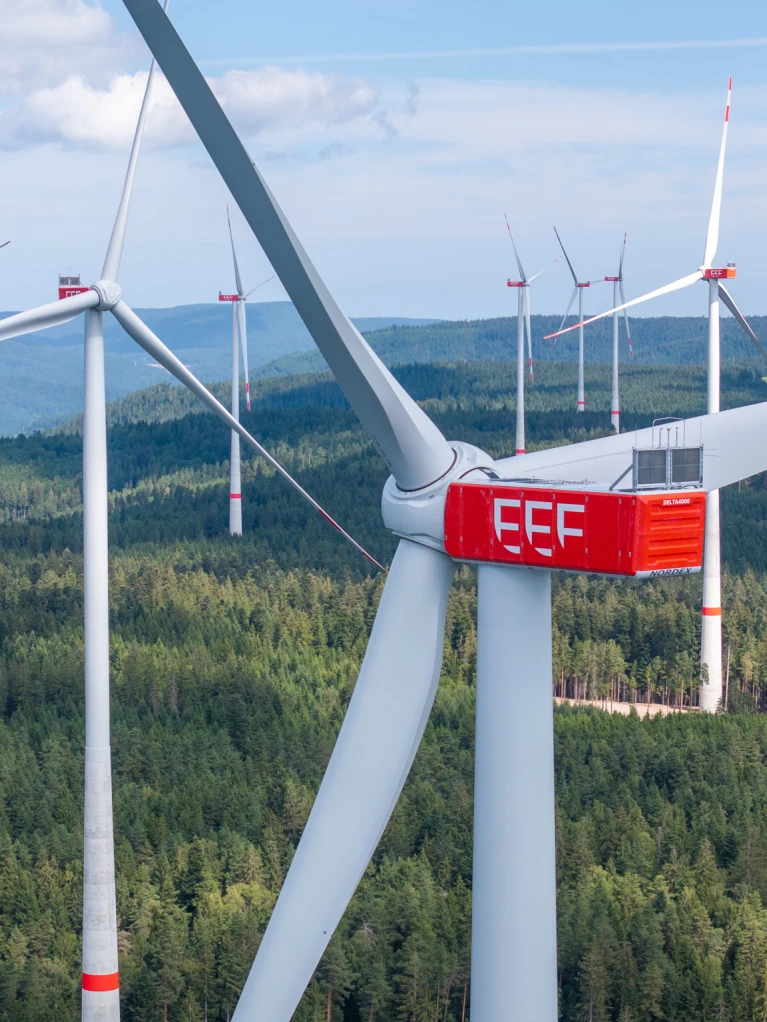
The Seewald wind park utilizes the state-of-the-art turbines from the Nordex Delta4000 series. This generation of plants is specifically designed for regions with moderate wind speeds, making it perfect for conditions in the Black Forest. With a hub height of 164 meters, the rotor blades reliably reach the higher, windier layers above the forest.

Types of plants used:

7x Nordex N149 / 5.7 MW / Hub height 164 m

1x Nordex N133 / 4.8 MW / Hub height 164 m

With a hub height of 164 meters, the turbines reliably harness the stronger winds above the tree canopy. The selected type combination combines high energy yield with economical operation and good integration at the site.

  • High efficiency at medium wind speeds

    The large-diameter rotor blades are designed for optimal performance in regions with less consistent wind – a clear advantage for Baden-Württemberg.

  • Noise-reduced design

    Thanks to optimized blade geometry and pitch control, the installations operate quieter than comparable types. This makes them particularly suitable for use in forests.

  • Digital control systems

    Modern monitoring technology ensures predictable maintenance, high availability, and efficient operation throughout the entire life cycle.

  • Future-proof series quality

    The Delta4000 series is proven, advanced, and modular – ideal for long-lasting operation and easy spare parts supply.

For EEF, dismantling is not a mandatory program but part of our commitment to genuine sustainability. A guarantee ensures the complete dismantling of the Seewald wind farm. Facilities are recycled according to the Closed Substance Cycle Waste Management Act, areas are recultivated, and replanted with site-appropriate mixed tree species. Especially in the forest, we only intervene if we return at least as much nature as we use at the end. For EEF, dismantling is not a conclusion – it's proof that ecological responsibility encompasses the entire life cycle.

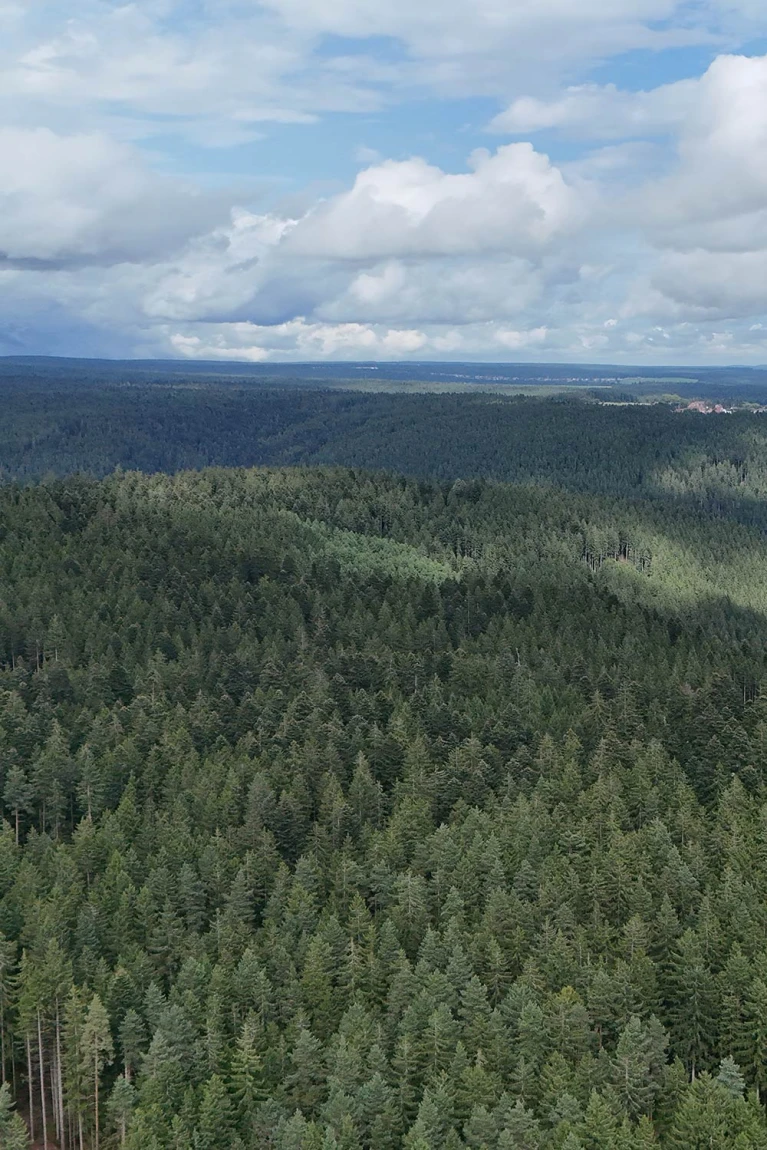
The image is for illustration purposes only. Changes and deviations in the final project course are reserved.
The image is solely for illustration purposes. Changes and deviations in the final project course are reserved. For the best possible experience, we recommend using a desktop device – only selected sections are visible on mobile devices.

Perspectives of our Companions

“Es ist ein besonderes Gefühl, eines der größten Windprojekte Baden-Württembergs in dieser Phase zu übernehmen. Schon bald werden sich im Nordschwarzwald die ersten Rotoren drehen – in einer Region, in der die Windenergie lange vernachlässigt wurde. Dass wir im Baumanagement weiterhin auf die lokale Expertise von Altus setzen und partnerschaftlich mit den Menschen vor Ort arbeiten, verankert das Projekt tief in der Region. Genau so gelingt die Energiewende 2.0: gemeinsam, verantwortungsvoll und verwurzelt im Land.”

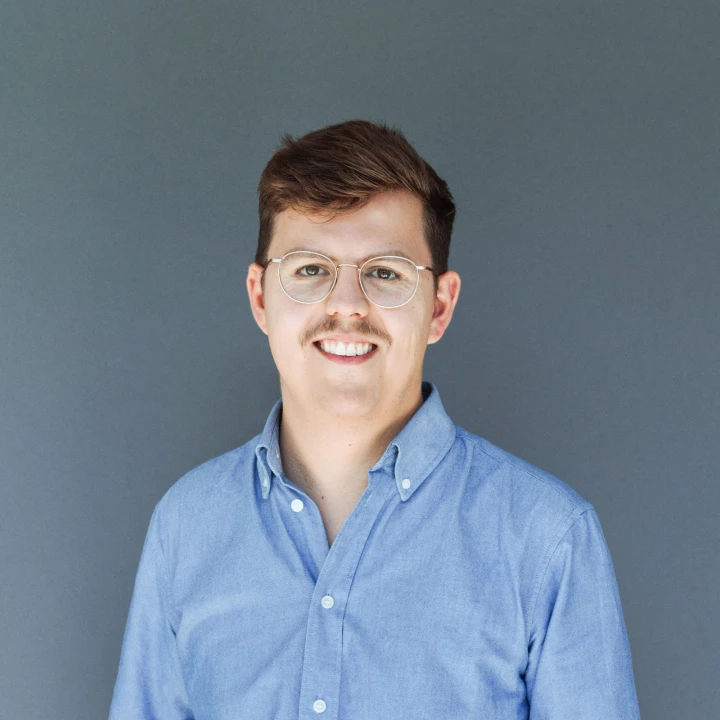
Portrait of a smiling man wearing glasses and a blue shirt against a gray background
Julian Kilchling Project Management Seewald

Our Team: The Minds Behind the Project

You Have Questions? We Have the Answers.

In sensitive areas such as roads, forests or bodies of water, the horizontal directional drilling method is used - a trenchless and particularly environmentally friendly method.

First, two excavation pits are created: a starting pit and a target pit. From the start pit, a steerable drilling head works its way in a gentle arc under the respective obstacle. Its position is continuously monitored. A bentonite drilling suspension - a special mixture of clay and water - is pumped into the drill channel via the drill rods. It flushes the loosened soil through the channel back to the starting pit and stabilizes the borehole at the same time.

After the so-called pilot bore, the drill head is removed and a widening bulb is attached, which gradually enlarges the channel. Only when the bore channel is sufficiently dimensioned are the empty pipes pulled in. These are later used to pull in the medium-voltage cables and fiber optic cables.

The drilling slurry forms a stable casing around the pipes. Finally, it is disposed of professionally and the excavation pits are backfilled.

The electricity generated at the Beckum wind farm is fed into the public grid. If you would like to use green electricity as a resident, you can choose a certified green electricity tariff from your energy supplier. Some providers even guarantee that the electricity comes directly from regional wind farms. In this way, you can actively support the local energy transition - even without your own solar power plant.

All Questions

Are you ready to help shape the energy future of tomorrow? Contact us!

Contact
Project Newsletter

Don't miss any news?

Receive news, dates, and project information directly by email – clearly prepared, reliably delivered.

Sign up now

Discover more EEF projects

EEF is driving the energy transition nationwide with innovative projects, a regional focus, and real impacts locally. Take a look at our other energy projects.

All Projects